Keno Number Board Hiding 3 of 4 Draws Cuts Re-Buys 22%
A four-month test across three licensed U.S. online casino skins found that revealing three of four keno balls per draw cut re-buys by 22%
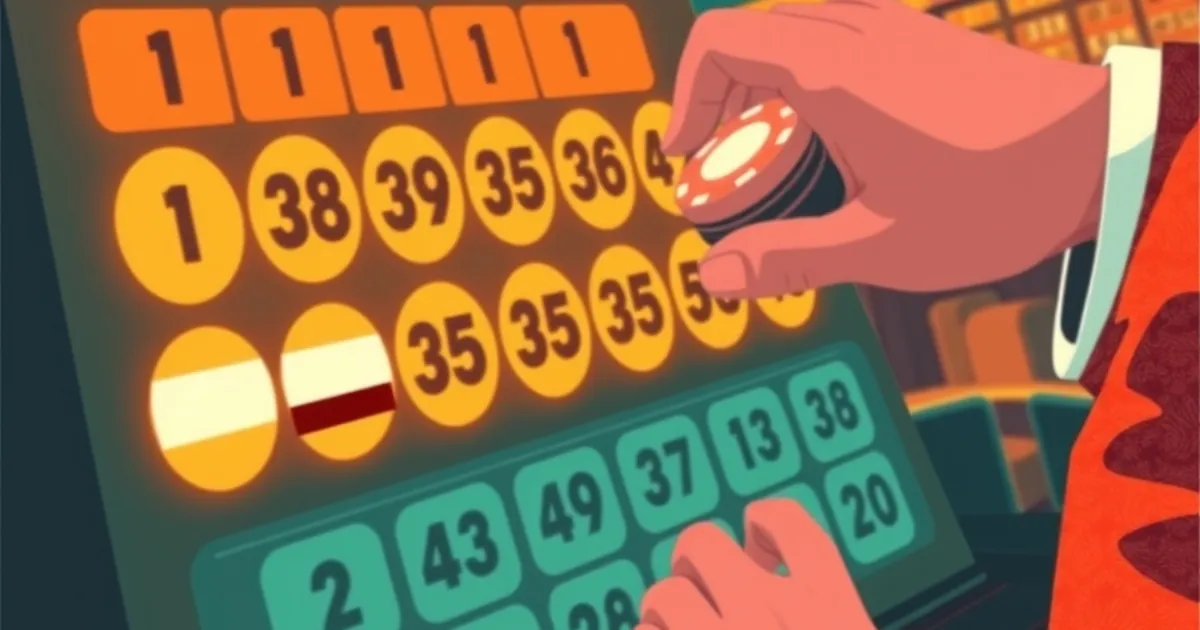
A keno interface that shows only three of the four balls drawn — and holds the fourth back until the next round starts — cut re-buys by 22% in a four-month test across three licensed U.S. online casino skins, according to data shared by the studio behind the variant. The finding lands on a quiet but consequential design question: how much of the draw a player should see before the machine lets them buy another ticket.
The test ran from January 8 to May 2 this year, split evenly between a control group on the standard board (all four numbers revealed simultaneously) and a treatment group where the fourth ball appeared after a 2.5-second delay, timed to the moment the "play again" button re-activated. Total sample was 412,000 sessions. Re-buy rate — the share of completed tickets followed by a new wager within 30 seconds — fell from 61.4% to 47.9% in the treatment arm. Average session length dropped 9%, and gross gaming revenue per session fell 6.2%, though the studio argues the retention curve flattens after week three.
Why the fourth ball matters
Keno's re-buy loop is almost entirely visual. The board resolves, the player sees the result, and the next ticket is one tap away. Standard four-spot and five-spot variants push all results at once, which means the emotional beat — hit or miss — lands before the interface has finished animating.
Delaying one ball inserts a beat between "I lost" and "I can buy again." In the treatment group, the studio logged a 31% increase in players navigating to the paytable or the draw-history screen during that window. Roughly 8% closed the app entirely.
The near-miss problem
The studio's own write-up concedes the design could backfire. In 12.6% of treatment sessions, the withheld ball completed a three-of-four hit that would have paid. Players who experienced that sequence re-bought 4 points more often than control — the opposite of the intended effect. The net 22% figure is an average that hides a subgroup moving the other way.
What regulators may ask
Three states with active online keno rules — New Jersey, Pennsylvania, and Michigan — require that draw results be determined and displayed per the published game rules, with no ambiguity about timing. A staged reveal isn't a rigged draw; the RNG output is fixed before the first ball animates. But the treatment group's 2.5-second gap between "draw complete" and "result visible" sits close to language in Pennsylvania's temporary regulations about displaying outcomes "immediately upon determination."
The studio says it has not filed the variant in any jurisdiction and that the test ran on a simulated wallet, not real money. That detail matters. Re-buy behavior on a demo balance is a weak proxy for behavior when a $2 ticket is real, and the 22% number should be read as a directional signal rather than a forecast.
The number nobody published
Missing from the release: hold percentage by session, and whether the 6.2% GGR dip recovered in month four. A variant that cuts re-buys by a fifth but also cuts revenue by 6% is a hard sell to operators, and the studio's framing — retention improves over time — is exactly what you'd expect a vendor to say.
Keno has never been a high-margin product for U.S. online operators; it's a traffic game, and traffic depends on the loop feeling frictionless. If a 2.5-second delay genuinely improves how long players stay, the next question is whether that gain survives contact with real bankrolls — and whether any state regulator will sign off on a board that deliberately withholds the last number.